
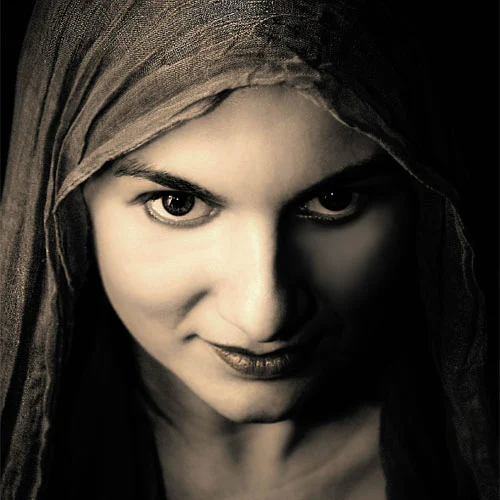
This article is a detailed explanation of the Bahun Tribe, which is the highest caste in Nepal. It clarifies the types and internal rankings of Brahmins, who are the Hindu priest class, and a complete list of surnames. In addition, it explains everything from the strict rules of Jaat to modern changes in marriage, using real local views. It completely covers the characteristics of the Bahun Tribe, which is essential for understanding them.
Who are the Bahun people of Nepal?
The Bahun people are a priestly class that held the highest rank in Nepal's former caste system, and they are of Aryan descent. Their facial features are generally characterized by long, high, pointed noses and deep-set eyes. Among the various ethnic groups in Nepal, their appearance is the most opposite to that of Mongoloid people. As a result of their former top-ranking status, many Bahun people still hold key positions in the upper levels of Nepal's government today. Even though they are from the priestly class, not everyone holds an important office, so most Bahun people make a living as self-sufficient farmers. Regarding the pronunciation of 'Bahun,' the Romanized spelling does not perfectly match the local language. While it sounds like 'Ba-hun' in other languages, locals pronounce it more like 'Bah-uhn,' as if the word is divided into 'Bah' and 'un'.
The Brahmin class itself exists independently within various Hindu ethnic communities, such as the Newar people (the indigenous middle class of Kathmandu) and the Maithili-speaking Nepalese (people of Indian origin in the Terai plains), but these are merely internal hierarchies created within each tribe. In the official caste system of the country of Nepal, only the Aryan Bahun people were formally recognized as true Brahmins.
Classification of the Bahun people
There are two types of Bahun: Kumai Bahun and Purbiya Bahun. These are factions based on origin and the period they arrived in Nepal, rather than a hierarchy of rank. The Kumai Bahun were recognized as such because they arrived later from the Himalayan regions of North India, specifically from Kumaon and Garhwal. In contrast, the Purbiya Bahun are people who settled in Nepal much earlier. Unlike the Kumai Bahun, their exact origins are not as clearly known.
Kumai Bahun
Literally speaking, Kumai Bahun means a Bahun from Kumaon (Uttarakhand) in India. Compared to the Purbiya Bahun, the Kumai Bahun have a clear origin, and unlike the Purbiya who became indigenous, they were a more distinct and legitimate existence in terms of lineage. However, they have a history of being excessively viewed as rivals by the Purbiya Bahun, who had already seized the power structure of Nepal before the Kumai Brahmins began to settle there. Yet, the fact that they actually had no choice but to accept the Kumai not as a different class but as the same Bahun class shows that the Kumai possessed a legitimacy (purity of lineage) that the Purbiya could not reject in order to maintain their own consistency. If the Purbiya had rejected the Kumaie, whose origins were completely clear, by claiming they were "not Bahun," the very consistency of the banner of "legitimacy by lineage" that the Purbiya themselves had upheld would collapse. In other words, it can be said that this rivalry arose because the Purbiya side feared that their own power structure would be shaken by the true legitimacy possessed by the Kumai.
Even from the perspective of the strict Kumai side, the Purbiya Bahun, who had already become indigenous and possessed a unique religious outlook that integrated local gods not found in the ancient scriptures (Vedas), appeared foreign, and it seems they did not recognize them as legitimate Bahuns. As time passed since then, the Kumai gradually spread throughout Nepal.
The Kumai Bahun people are currently distributed all over Nepal, and in some cases, they only retain their surnames and are no longer Kumai due to marrying into the local Bahun population.Furthermore, many years have passed since the abolition of the caste system, and especially recently, along with the weakening of caste consciousness, some people do not even know that Kumai Bahun or Purbiya Bahun exist, and even among the Bahun themselves, there are cases where young people no longer know about it. However, when you go to western Nepal, Kumaon is adjacent after all, so the number of people, even non-Bahuns, who are aware of the existence of the Kumai Bahun increases.
Purbiya Bahun
Purbiya comes from the Nepali word "Purva = East." They are people who had already become indigenous to the main area of Nepal hundreds of years before the Kumai arrived. Many of the Purbiya Bahun are descendants of Hindu priests (Brahmin is actually a coined English word made from the Sanskrit word "Brahman") who fled to the safe mountains from the Islamization occurring in the Indian subcontinent at that time. It is also historically proven that they built a mutually beneficial relationship with the kings and influential people of the Khas people, who were powerful in the region of present-day Nepal at that time, and constructed and expanded Hindu society. Therefore, comments are occasionally seen on the internet suggesting that the Kumai and Chettri (the original Khas people) acted as a pair in a militant manner, but this lacks evidence, and tracing it back, it is highly likely that its source is a random comment made by someone. The truth is completely the exact opposite. It was the Purbiya who shared their destiny entirely with the Khas (Chettri) and expanded Hindu society throughout all of present-day Nepal. The facts that they not only reigned over Khas society but also became part of the Khas ethnic society that they themselves had modified are eloquently told by the incorporation of indigenous beliefs and the existence of a large number of mixed-race populations such as Khatri (KC). Conversely, it would have been impossible for the Purbiya to attain power in areas where the Khas people had already established their influence without such a process. In other words, considering the long span of their history, it is extremely likely that the Purbiya mixed somewhere, and in fact, there are a large number of people who are a mixture of Bahun men and local women from long ago. This has also been made clear by DNA analysis of the Purbiya Bahun.
Note: This does not mean that the Purbiya are not legitimate. This is because it has not been determined which DNA represents a legitimate Brahman. The lack of a standard for what is legitimate is the same in India, and DNA analysis has shown that unique local elements are mixed in each region. What is being said in this section is that there are two types of Bahun, and while the Kumaie have a clear lineage, the Purbiya arrived in Nepal hundreds of years ago to the point where their origins are no longer known and became indigenous. While facing the dilemma that they would destroy themselves by failing to maintain consistency unless they accepted the Kumaie who arrived later, they differentiated the Kumaie in order to maintain the power they had previously constructed and protect their position in the mainstream of Nepalese politics, which resulted in the fixed division of Nepalese Brahmans into two factions.
Due to this background and their overwhelming population size, the Purbiya Bahun were more mainstream in politics than the Kumai. There is also a duality. Despite the fact that there was a framework of Kumai and Purbiya on the surface, it was actually not uncommon for these two factions to intermarry, and as long as they lived in the same region, it was something that conversely happened naturally.
Historically, no hierarchy existed between the Kumaie and the Purbiya, and even in the modern era when the already universally existing caste system was purposely institutionalized in the constitution, no legally clear superiority, inferiority, or hierarchical ranking based on geographical or birth-place origins such as 'Kumaie' and 'Purbiya' was established.
The hierarchy within the Bahun people: Upadhyaya and Jaisi
The historical episode of "accepting the Brahmans who came from Kumaon into the Nepalese Brahman class" was a bitter choice made by the Purbiya side to maintain the consistency of their own rule, and it is the greatest evidence proving the strength of the genuine (irrefutable) lineage and ritual authority that the Kumai side possessed. Rather than looking only at the superficial ranking (the rivalry or political classification), this is the core of the power dynamic: "why Purbiya had no choice but to accept Kumai.
You now understand that there are Kumai and Purbiya factions among the Bahun. Next is the hierarchy within the Bahun themselves. They are broadly divided into Upadhyaya (Upadhaya) and Jaisi (though there are even smaller groups, such as the five clans whose surnames end in 'Gain'). Upadhyaya refers to 'pure' Bahun. In contrast, people were categorized as Jaisi if a Bahun married a Jaisi, married without following formal customs, or if a Bahun widow remarried a Bahun man. This means that a Bahun with any surname could actually become a Jaisi, and just because one person is Jaisi does not mean everyone with the same surname is also Jaisi; even some Nepalese people misunderstand this point. An Upadhyaya can become a Pandit, or even without graduating from a school for Pandits, they can serve as a simple substitute when a Pandit is absent. However, a Jaisi cannot become a priest or even a substitute for any caste. That is the major difference between Upadhyaya Bahun and Jaisi Bahun. Both Upadhyaya and Jaisi exist within both the Kumai and Purbiya factions.
- Kumai Upadhyaya
- Kumai Jaisi
- Purbiya Upadhyaya
- Purbiya Jaisi
Kumai Upadhyaya and Purbiya Upadhyaya are of the same rank, and Kumai Jaisi and Purbiya Jaisi are also of equivalent rank.
Even people with the same surname may belong to different ranks depending on the region. This happens because their 'jat' (caste status) changes when someone enters into an inter-caste marriage. If such a marriage occurred several generations ago and the descendants increased in number, an entire village might end up having a different jat. You may find people with the same surname living near you, yet their social rank could be different. Therefore, in confusing cases, you cannot be sure without asking a local priest or the community society. For example, I once knew someone named Adhikari whose entire village was Chhetri. He was very straightforward and explained without hiding anything that his village had become Chhetri due to inter-caste marriages in the past.
Things can be misleading sometimes. For example, some people who do not like Bahuns might lie and say a Bahun is not actually a Bahun. I had an acquaintance from the Chhetri group named Barakoti who did not like Bahuns very much; he claimed that a certain person, Mr. A, was a Chhetri. However, Bahun people themselves were consistent in saying that Mr. A was definitely a Bahun. Such situations do happen.
Additionally, since many Nepalese people are unfamiliar with 'jats' other than their own, there are cases where they may simply lack knowledge about the Bahun caste and say something inaccurate. In particular, many people in Nepal tend to pretend to know things on the spot, which can make things confusing until you get used to it.
Generally speaking, you can recognize Bahun people by their sharp, high noses and deep-set eyes, but it is difficult to say if there are clear physical differences between Kumai, Purbiya, and Jaisi. In my experience, many Kumai look exactly like the hill people I saw while traveling in North India, though this is not true for everyone. Also, I have an impression that many Jaisi, both men and women, tend to be tall with large frames. I believe those who observe closely might agree with me on this point. However, this is just an impression from what I have seen; there are well-built people among the Upadhyaya as well, so it is not a rule. Usually, Bahun people are short and have a slender build. Furthermore, because there are many cases of mixed heritage, you cannot generalize the appearance of every individual.
List of Bahun Surnames
Kumai Bahun
Awasthi, Upreti, Oja, Oli, Kharel, Kadel, Kandel, shiwakoti, Sedhain, Chataut, Tiwari, Tripathi, bhatt, Pathak, Panel, Panta, Prasai, Bhetwal, Mainali, Mishra , Regmi, Lekhak, Lohani
Purbiya Bahun
Acharya, Adhikari, Aryal, Gautam, Khatiwada, khanal, Ghimire, Gyawali, kuinkel, Koirala, Satyal, Sapkota, Sangraula, Sigdel, Simkhada, Soti, Dakal, Dahal, Dhital, Timilsina, Tiwari, Devkota, Dhungana, Dhungel, Duwadi, Niraula, Neupane, Nepal, Banskota, Bhattarai, Parajuli, Baral, Pandit, Pyakurel, Pudasaini, Marhatta, Mishra, Mudbhari, Lamichhane, lamsal, Luitel, Rupakheti, Regumi, Wagle, Chaulagain, Humagain, Guragain, Chapagain, Bajagain
Jaisi Surnames
As mentioned before, cases vary individually—for example, a single surname may have both Jaisi and non-Jaisi members due to marriage. However, the following surnames originally belonged only to the Jaisi.
Rijal, Bhusal, Rimal
Surnames found in the Chhetri community as well
Lamichhane, Pathak, Adhikari (who are mostly Bahun), Bhattarai, Chaulagain (one of the five 'Gain' clans), and Mishra (of Terai origin).
The information provided above serves only as a general reference. It has been over half a century since the formal abolition of the caste system. Especially in the last two decades, there has been a growing trend of inter-caste marriages, including those between the Bahun and Chhetri communities. While traditional identities remain, social dynamics are evolving, and many families today reflect a blend of these different backgrounds. Consequently, it is common to find individuals with a Bahun surname who have a mixed heritage, reflecting the increasing social integration within the country.
The surname Mishra is also found among the Maithili people. Some Purbiya Bahun surnames are common in Central India as well, but this does not mean they share the same ancestry. Except for cases like the Kumai Bahun, who clearly came from India and have known roots, most Nepalese people do not necessarily share the same bloodline as Indians just because they have the same surname.
Bahun marriages are determined by Gotra (ancestral lineage)
Every surname has an ancestral origin called a 'Gotra.' For example, the Gotra for the surname Gautam is Bharadwaj. Bharadwaj is a saint who appears in mythology. Although there is a surname called Bharadwaj among the Chhetri people, it is unrelated to the Gotra of the Bahun people. Usually, each surname has only one Gotra, but there are a few surnames that have two.
For example, let's look at the surname Pokharel. The Pokharel surname has two Gotras: Bharadwaj and Atreya. A Pokharel with the Bharadwaj Gotra and a Pokharel with the Atreya Gotra share the same surname, but since their Gotras are different, they are allowed to marry. However, if both individuals are Pokharel from the Atreya Gotra, marriage is forbidden. Since the Gotra of the Gautam surname is also Bharadwaj, a Gautam cannot marry a Pokharel from the Bharadwaj Gotra, but they can marry a Pokharel from the Atreya Gotra. These Gotras are carefully recorded and preserved by local priests. Bahun people are well aware of their own Gotras to ensure they do not accidentally marry someone from the same lineage.
When Bahun people married someone from a different class, they used to lose their social rank
In the past, while the caste system was still in effect, marrying someone from a different class meant losing one’s rank. For this reason, inter-caste marriages were extremely rare until the system was abolished. Today, since there is no longer an official loss of rank, people are less concerned about it. There were two ways a person’s rank could descend: if they married someone from a class other than Brahmin, they were usually treated as Chhetri, but if they married someone from the Shudra class, they were treated as Shudra. Consequently, there are occasional cases where someone inherits a Bahun surname from their father but belongs to a different social rank.Middle names were also used to distinguish between classes
There is a clue to identify those who have a Bahun surname but have fallen to the Chhetri rank. For instance, this is true if their middle name is 'Bahadur.' Since Bahadur means bravery and is a name originating from warriors, Chhetri and Magar people prefer to use it. Conversely, Bahuns of the priestly class never use it. In the past, if a person had 'Bahadur' as a middle name and a Bahun last name, it was possible to observe that they were likely Jaisi or Chhetri. Today, this custom has disappeared, and people of all ranks freely choose any middle name they like. The naming process itself has become quite flexible.
Traditional life of the Bahun people
Their diet is basically vegetarian, but...
The Bahun Tribe basically have a diet centred on vegetables and milk, and they only eat goat as meat. Saying that they do not eat meat means that they eat it rarely, and they do eat it sometimes in private. In fact, it is a huge misunderstanding that Brahmins do not eat meat at all. Especially people from different castes tend to have such a wrong stereotype. Furthermore, the Bahun Tribe who have moved to cities have changed to eat anything in recent years. Those who have gone abroad and opened their minds no longer have strict rules or public stances regarding food. In the past, there were indeed many vegetarians, but now, even if they call themselves vegetarians, it has become more like they mainly eat vegetables and eat meat only a few times. Of course, on the other hand, some people still show that they definitely do not eat meat.
Regarding eating meat, as an exception, if you want to become a priest, you must attend a specialised school and follow a strict vegetarian diet. The Bahun Tribe are a priestly caste, but it does not mean that every member of the Bahun Tribe wants to become a priest. However, this depends on individual beliefs; I have seen people who are not priests but say they are complete vegetarians because they are Bahun, and I have also seen priests (also Bahun) who have eaten meat. Nepalese people love goat meat very much, so it seems they want to eat goat dishes, which are often made during ceremonies. This is the same in India, where there are also many Hindus; Brahmins in the hills of Northwest India and those in central coastal areas like Odisha eat meat and fish. Strict vegetarianism is probably only found among Brahmins in South India or Rajasthan. In particular, it seems some Brahmins in South India do not even eat eggs.
Chhaupadi Pratha: The custom of not touching women during menstruation
Chhaupadi Pratha is a custom where women are isolated in a special room during their menstruation. It is said that they must not touch anything except what is inside that room, and they cannot touch other people either. While separate outdoor huts were used in the past, today it is more common for them to stay in a designated room inside the house. This practice of staying in a room is still strictly followed in remote mountain villages, but it is decreasing across Nepal as a whole. Instead, many people still follow the rule of not preparing food during menstruation, which has become common knowledge. In fact, when I stayed at a friend's house, his wife began Chhaupadi. What I noticed was that, as a devout Hindu, she seemed to consider staying in the room a natural thing to do. She entered the room spontaneously, and I could even hear her talking and laughing sometimes. Although Chhaupadi is often discussed with a negative image, I felt that the believers are sincerely practicing their faith and tradition.
Janai: The white sacred thread worn diagonally over the shoulder
Bahun men wear a white thread called a 'Janai' diagonally over their shoulder. Women do not wear it. It is worn under the clothing directly against the skin, and this thin cotton thread is considered a sacred string in Hinduism. The Janai is a Bahun tradition, but all Chhetri people, as well as Newar Bahuns and Newar Chhetris (the Newar people have their own internal hierarchy including their own Bahuns and Chhetris), are also granted permission by the Bahun people to wear it.
Examples of traditional Bahun life included daily rituals such as bathing every morning or washing one’s body before entering the kitchen. There was also a rule not to allow people from different 'jats' (castes) into the kitchen. However, these traditions have been fading away over time.
Famous People of the Bahun Ethnic Group
KP Sharma Oli (Politician)Ramesh Kharel (senior police official)
BP Koilala (Politician)
Narayan Pokhrel (A famous Hindu priest known for chanting scriptures)
Kamal Nayan Gautam (A famous Hindu priest)
I have now explained the Bahun people in detail, covering everything from their types and surnames to their specific rules.

Comments